Affiliate links may appear below. As an Amazon Associate I earn from qualifying purchases. General information, not medical advice.
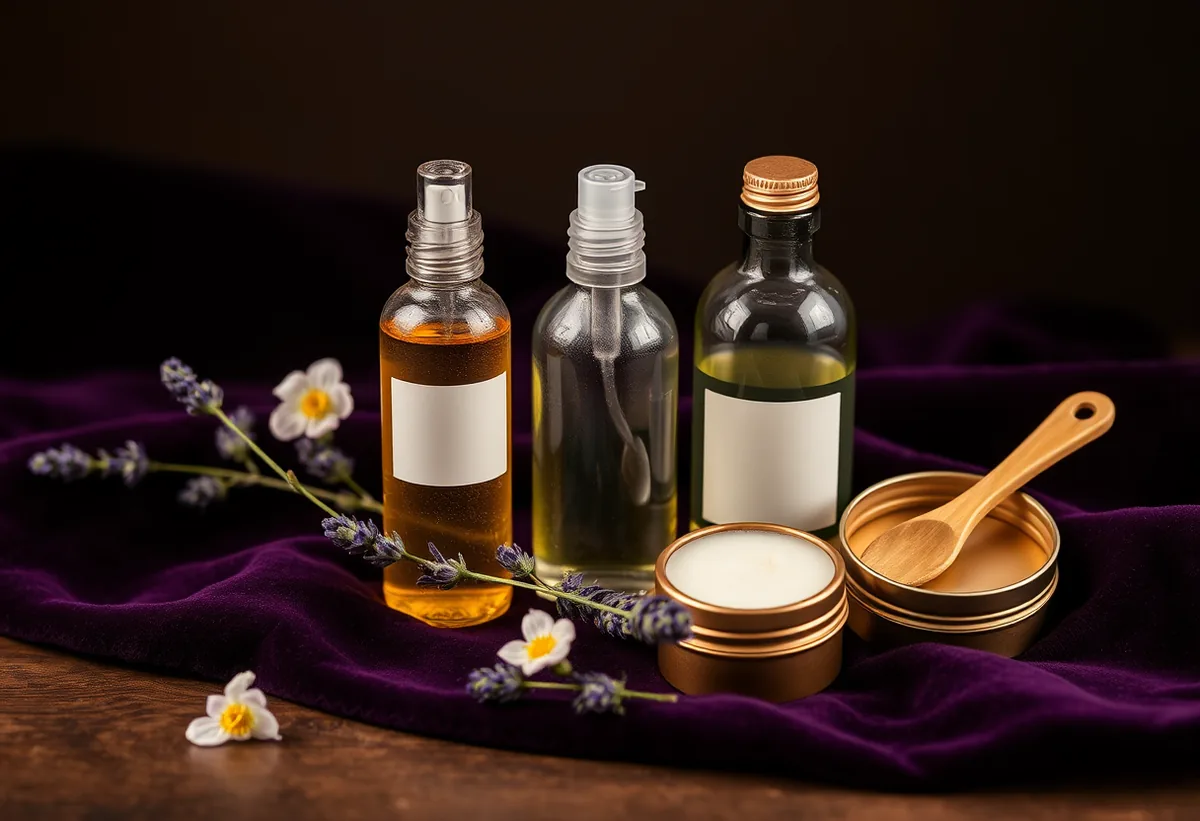
The spray bottle is the default image of perfume, but it is one format among several. Oils, mists, solid perfumes and scented creams all bring fragrance to a routine in different ways. Knowing the differences keeps you from buying the wrong one for how you actually live.
The base is the difference
A fragrance is aromatic material plus something to carry it. Change the carrier and almost everything else changes too.
Alcohol-based sprays (parfum, eau de parfum, eau de toilette, cologne) dissolve the aromatics in ethanol. The alcohol evaporates fast, carrying the scent into the air, which is why sprays project. We cover the strength tiers in EDP vs EDT vs cologne.
Perfume oils use a non-volatile oil as the carrier, commonly a fractionated coconut oil, jojoba or a similar cosmetic oil. With no alcohol to flash off, the scent stays where you put it and releases gradually.
Solid perfumes suspend aromatics in a wax-and-oil base, usually beeswax or a plant wax with a skin-friendly oil, set in a tin or compact. The wax holds the scent close.
Body mists and fragrance splashes are the opposite end of the spectrum: a low concentration of aromatics in a mostly alcohol-and-water base, designed to be used liberally.
Scented creams and lotions put fragrance into a cream or lotion format. Some are made as body products for layering with a matching perfume; others are face products where scent is only one part of the formula. Read the intended use and ingredient list, patch test a new product, and choose face care for its skincare purpose with guidance from a qualified source. We cover these products only for their fragrance character, never for a treatment or skin benefit.
How they behave on skin
Perfume oils
- Close to the skin. Oils tend to radiate softly rather than fill a room. They suit people who want a scent that someone notices only when they lean in.
- Warm development. Without alcohol’s sharp opening, the top notes often come across rounder and the base takes over sooner.
- Longevity. Often good, because the oil base clings to skin and releases slowly. But a citrus-heavy oil is still going to fade sooner than an amber one, as we explain in why fragrance fades.
- Texture. A little goes a long way and can feel slick. Oils can mark light fabrics.
- Compatibility. Oils don’t work in an atomizer. You apply them by dabbing.
Solid perfumes
- Portable and spill-proof. Easy in a pocket or bag, and generally fine in hand luggage.
- Subtle projection. Even closer to the skin than oils, with a soft, balmy wear.
- Limited complexity. Wax bases can mute the sparkle of top notes, so very bright citrus can read flat.
- Reapplication. Easy and precise, which suits people who like to top up.
- Texture. Can feel waxy, and the wax can melt in heat.
Body mists
- Light and airy. A low aromatic concentration means a soft, short-lived scent.
- Generous application. You spray them broadly, including on hair and clothing, with the understanding that they fade quickly.
- Good for warm days and layering. A mist gives a gentle background or a top layer over a body product.
- Low commitment. They are usually simple compositions, so they tend to be less nuanced than a fine fragrance.
Concentration and the “which is stronger” question
People often assume an oil must be stronger because it feels richer. The truth is that concentration, projection and longevity are separate dials.
- Oils are frequently highly concentrated in aromatics, but they project little because nothing pushes them into the air.
- Sprays disperse widely because of the alcohol, even at modest concentrations.
- Mists are low on aromatics and broad in reach, then gone.
So pick based on the effect you want. Do you want something intimate and quiet, or something that announces itself? If you wear scent at work or in close company, the quieter formats are kinder. See scent etiquette.
Skin chemistry and fit
Oils and solids sit on skin for hours, which gives your own warmth and chemistry more time to shape them. Two people can find the same oil smells different on them, and the difference between wearing it for ten minutes and wearing it all evening is greater than with a spray. This is general experience rather than a measured rule. The practical advice is to sample before committing, and wear it for a full day before you judge.
Because oils and waxes stay on skin longer, they can be a bigger issue if you’re sensitive to fragrance ingredients. FDA identifies fragrances among the common allergens in cosmetics, and notes that individual fragrance ingredients are often listed only as “fragrance” or “perfume.” The American Academy of Dermatology recommends testing a new product on a small area of skin first. Our patch testing guide goes through how.
How to apply
Oils. Use a roller or dropper to place a small amount on pulse points: wrists, inner elbows, sides of the neck. One or two dabs per spot is usually plenty. Don’t rub vigorously, which warms the oil and speeds the opening. Let it settle.
Solids. Swipe a fingertip across the surface or use the applicator, then dab on skin. Warm the wax with your finger for a moment if it’s firm.
Mists. Hold the bottle at arm’s length, spray an arc, and walk through it or mist across your body. Try hair and clothing too, testing a hidden spot first.
Roller versus dropper versus spray
- Rollerball. Controlled and travel-friendly, with the ball applying a thin film. Good for oils. The ball can pick up lint, so keep the cap on.
- Dropper. Gives precise dosing but is fiddly and easy to over-apply. Better at home than in a handbag.
- Spray. Fast, even and the most generous. Ideal for mists and alcohol-based fragrances, unsuitable for oils.
- Tin or compact (solid). Simplest to carry, and clean fingers are the only tool you need.
Storing each
The enemies are the usual ones: heat, light and air, as we cover in how to store fragrance.
- Oils are fairly stable, though plant carrier oils can go rancid over time. If it smells sharp, waxy or like old crayons, it has turned. Keep the cap tight and the bottle cool.
- Solids soften in heat. Keep them out of hot cars. If one melts, it usually re-sets, though the texture may change.
- Mists are the least robust, with delicate fresh notes that fade first. Keep them cool and dark and use them within a reasonable time.
Which should you buy?
- You want something quiet and personal: an oil or solid.
- You travel a lot: a solid or rollerball.
- You want an easy, light everyday veil: a mist.
- You want projection and an evolving structure: a spray.
- You want to experiment: layer a mist or oil under a spray, one at a time, and see what pairs. Our layering guide has the rules.
Whichever format you choose, the best test is the plainest. Wear it for a day. If you still like it at hour six, it’s yours.
Questions
Are perfume oils stronger than sprays?
They are often more concentrated and sit closer to the skin, but 'stronger' depends on what you mean. Oils usually project less and wear warmer and quieter. A spray with alcohol throws scent further.
What is a body mist?
A light, heavily diluted fragrance meant to be applied generously on skin and body. Mists generally use a low fragrance concentration, so they fade faster than eau de parfum or parfum.
Do perfume oils last longer on skin?
Often, because there is no alcohol to flash off and the oil base lingers on skin. Individual skin and the aromatic materials in the blend still decide the result.
Can I wear an oil, a mist and a spray together?
Yes, as a layering technique, but keep doses small and patch test combinations. See our layering guide for how to choose pairings.
What is a scented body cream?
A cream or lotion with fragrance as part of its sensory experience. Check the product label for intended use and ingredients; we do not assess skincare performance.
Sources
As an Amazon Associate I earn from qualifying purchases. How we pick.