Affiliate links may appear below. As an Amazon Associate I earn from qualifying purchases. General information, not medical advice.
A bottle of fragrance is a stable-looking object that is quietly doing chemistry. Aromatic compounds react with oxygen, break down under light, and shift with heat. Storage can’t stop that, but it can slow it a lot. Here’s the short list of things that matter, in rough order.
The four enemies
Heat. The biggest one. Warm conditions speed up the chemical reactions that change a scent. Think of a closed car in summer, a sunny windowsill, a shelf above a radiator. Even normal room warmth, held for years, is gentler than repeated hot spikes.
Light. Sunlight, and to a lesser extent bright indoor light, drives degradation. This is why so many perfumes come in dark glass or opaque boxes, and why a bottle of pale liquid on a bright vanity is a slowly fading display piece.
Air. Oxygen oxidizes fragrance materials, especially delicate top notes like citrus. Each time you open a bottle, a little air gets in. A bottle that’s nearly empty has more air relative to liquid and tends to degrade faster.
Humidity and swings. Moisture on its own isn’t the main villain for sealed glass, but bathrooms combine heat, steam and constant temperature swings. That cycling is harder on a fragrance than steady warmth.
Where to keep it
Good:
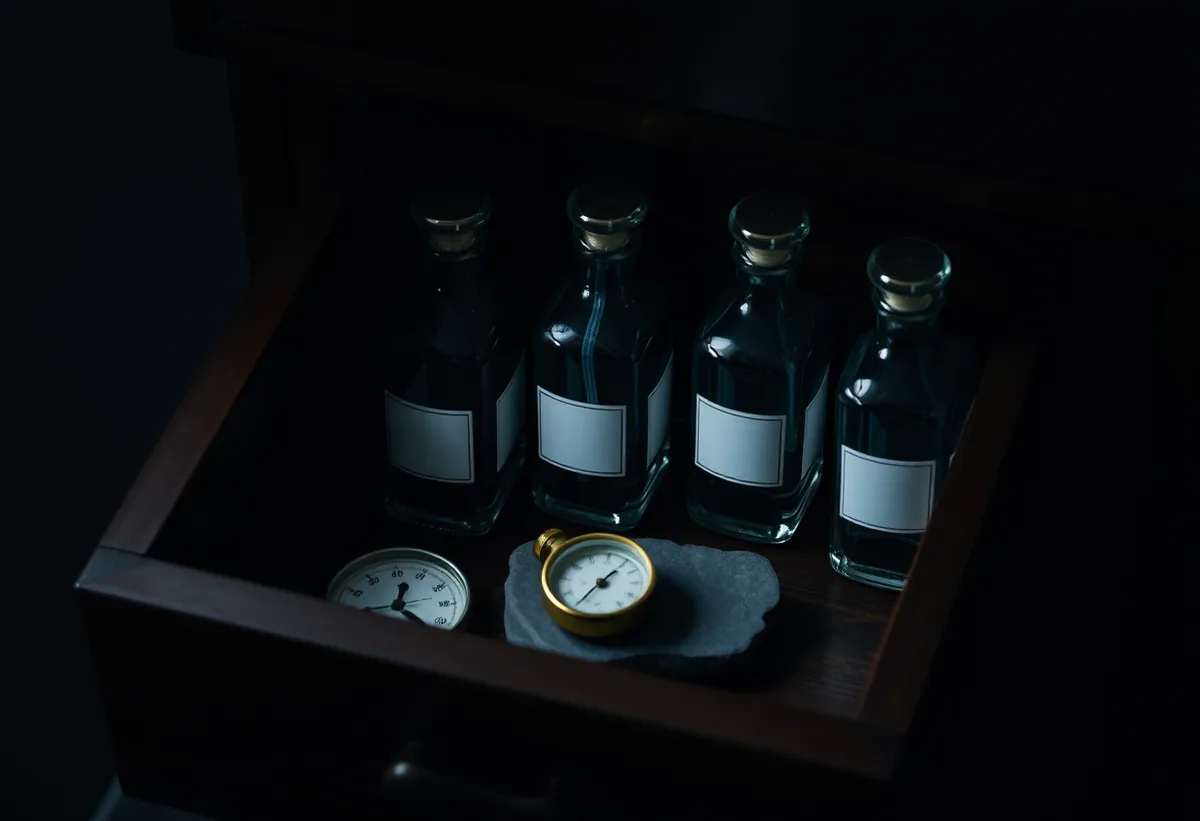
- A drawer or closet in a bedroom, away from external walls and windows.
- The original box, on a shelf out of direct light.
- A cool cabinet. Steady and cool beats cold and variable.
Fine, with caveats:
- A dresser top, if no sun reaches it. Bottles are also pretty, which is a hazard of its own, because we put pretty things in the sun.
- A dedicated fragrance fridge or wine fridge. Some collectors swear by cool storage. It slows aging, but it’s not required, and condensation on removal can affect labels and boxes. If you try it, let the bottle come to room temperature before use.
Avoid:
- The bathroom shelf.
- A windowsill or glass-fronted display unit in daylight.
- Cars, gym bags, luggage left in hot places.
- Directly above heating vents or appliances.
Keep the cap on and the atomizer clean
Close the bottle every time. If it has a screw cap or a magnetic cap, make sure it seats properly. Spray bottles are fairly well sealed when the cap is on. Splash bottles with a stopper or open neck lose more to evaporation, so give them extra care.
Don’t pump the sprayer to test it more than you need to. Each unnecessary pump wastes liquid and lets the dip tube pull in air.
Decants and travel sprays
Decanting into small atomizers is a popular way to sample or travel with a fragrance. A few things help:
- Use glass if you can. Some plastics can interact with fragrance over time, and cheap atomizers can leak.
- Fill most of the way. A mostly-full small vial has less air in it than a half-empty one.
- Label it. You think you’ll remember. You won’t.
- Treat it as short-term storage. Decants are great for months of use. For long-term keeping, the original bottle is generally the better home.
- Keep it out of your bag’s hot pocket. A pocket in a coat in a warm office is not cool storage.
If you buy decants from third parties, know that you’re trusting someone else’s handling. That’s a reason to prefer sellers who are transparent about sourcing.
How long does it last?
There’s no single expiry date. Fragrances sold in the US don’t carry mandatory shelf-life dates the way food does, and the answer varies by formula. Some products carry a batch code or a period-after-opening symbol (a small open jar); check the packaging, but treat any date as guidance rather than a cliff.
Broadly:
- Citrus and fresh scents tend to age fastest. Their top notes are the most fragile.
- Florals vary. Delicate ones can turn sooner than robust ones.
- Woody, amber, musk and resinous scents generally hold up longest.
- Natural-heavy formulas can age differently, because natural materials are complex mixtures that continue to change.
Plenty of people enjoy a bottle for five to ten years or longer if it’s been stored well. That’s an observation from collectors and perfumers, not a guarantee.
Signs a bottle has gone off
- Color changes. Darkening is common over time, especially in formulas with vanillin, and doesn’t always mean the scent is spoiled.
- Cloudiness or sediment. Particles floating in the liquid can signal that something has broken down, though some natural materials are cloudy by design.
- Sour, harsh or metallic opening. The big one. If the bright top notes have turned sharp or vinegary and the heart seems flat, it has probably oxidized.
- Weaker overall scent. Evaporation or degradation, particularly in splash bottles.
When in doubt, spray a little on a strip and compare it with a fresh sample of the same fragrance if you can. Your nose is better evidence than any date.
Can you rescue an aged bottle?
Sometimes a bottle that’s turned slightly can be improved by letting it breathe: leave the cap off for a short while in a cool place so the sharp top notes dissipate. This works on some “off” openings that fade once the first few seconds pass. It isn’t a cure, and it won’t undo a real breakdown. If it smells sour all the way through, retire it.
Treat the cap and glass kindly
Wipe off any residue around the neck. Dried perfume left on a collar can crust up and affect the seal. And don’t leave a bottle on a bare stone or tile surface where it might get knocked. It’s an unglamorous way for a favorite to end.
One-paragraph version
Keep it cool, dark and closed. Don’t keep it in the bathroom. Keep original boxes if you’ve got room. Use glass for decants. Smell before you spray if a bottle is old. Everything else is detail.
If you’re also hunting for ways to make a fragrance last on skin, see why fragrance fades.
Questions
Should I keep perfume in the bathroom?
It's one of the worst spots. Showers swing the temperature and humidity many times a day, and heat accelerates the chemical changes that dull a fragrance. A bedroom drawer or closet is a better home.
How long does perfume last unopened and opened?
There's no fixed expiry. Stored well, many fragrances stay pleasant for years, and bottles kept cool, dark and sealed often last longest. Citrus-heavy and very natural formulas tend to turn sooner than amber and woody ones.
Should I keep the original box?
If you have the space, yes. The box blocks light and cushions the bottle, which is helpful for long-term storage. For daily-use bottles, it matters less.
How can I tell if a fragrance has gone off?
Look for a darker color, cloudiness or sediment, and smell for a sour, metallic or flat opening where the bright top notes used to be. Not every color shift means spoilage, but several signs together are a good indicator.
Sources
As an Amazon Associate I earn from qualifying purchases. How we pick.